
'Overall, domestic demand has moderated significantly. 'The weakening of private consumption, which for long has been the bedrock of aggregate demand, in particular, is a matter of concern,' RBI Governor Shaktikanta Das said in the MPC meetings, in October.

This development can strengthen the case for interest rate cut by the RBI.

The view among the regulator and the government is that the currency is overvalued
.jpg)
BSE auto index surged 2%, capital goods, healthcare and oil & gas indices also up.

ICICI Bank was the top gainer in the Sensex pack, rising around 4 per cent, followed by UltraTech Cement, Sun Pharma, Bharti Airtel, HUL, SBI, L&T, Axis Bank and IndusInd Bank. On the other hand, Reliance Industries, Bajaj Finserv, HCL Tech and HDFC were among the laggards.

Declining vegetable prices brought down the retail inflation to a 15-month low of 4.59 per cent in December and within the comfort zone of the Reserve Bank, government data showed on Tuesday. It is for the first time during the current fiscal that the Consumer Price Index (CPI) based inflation print is below 6 per cent or in the RBI's target range of 2 to 6 per cent. The central bank factors in the CPI-based inflation while arriving at its monetary policy. The inflation in December 2020 came down from 6.93 per cent in November, mainly on account of 10.41 per cent decline in vegetable prices over the year-ago period.
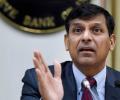
Bankers and economists agree rates will soften, though the quantum would depend on banks' asset-liability profile
The Reserve Bank is likely to maintain status quo on interest rates in its forthcoming monetary policy review but may change the stance in view of retail inflation piercing its upper tolerance limit, global uncertainties created by the ongoing Russia-Ukraine war, and the urgency to protect and boost growth, feel experts. The RBI governor-headed rate setting panel -- Monetary Policy Committee (MPC) -- will be holding its first meeting of the 2022-23 fiscal from April 6 to 8. The outcome will be announced on April 8.

There hasn't been any dramatic moment in the first act (the Budget) but nobody would complain. It's par for the course as long as the figures don't change in the main Budget, which will be presented after general elections.

Retail inflation declined to a 25-month low of 4.25 per cent in May mainly on account of softening prices of food and fuel items, with experts saying that RBI is expected to hold interest rates steady in the current fiscal. This is the fourth straight month when retail inflation has declined and the third straight month of Consumer Price Index (CPI) based inflation remaining within the RBI's comfort zone of below 6 per cent. CPI-based inflation stood at 4.7 per cent in April and 7.04 per cent in May 2022.

Reversal in the declining economic growth trajectory is clearly the need of the hour and all steps should be taken to bring about this change.

The Reserve Bank had kept policy rate unchanged in its review on April 7.

Last month, RBI slashed cash reserve ratio -- the percentage of deposits that banks have to keep with the RBI -- from 5.5 per cent to 4.75 per cent. With this, the central bank had infused Rs 48,000 crore (Rs 480 billion) into the economy.

Upside risks to inflation persist from higher growth and expansive govt spending.
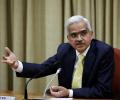
The Reserve Bank remains laser-focused to bring back retail inflation to 4 per cent over a period of time in a non-disruptive manner, Governor Shaktikanta Das stressed while voting for status quo in interest rates, as per minutes of the October policy meeting released on Friday. The central bank has been mandated by the government to ensure the Consumer Price Index (CPI) based inflation is at 4 per cent, with a band of 2 per cent on either side. The retail inflation, which was above 6 per cent during May and June, has started moving down and stood at 4.35 per cent in September.

While Raghuram Rajan has said in the past that other factors, including domestic fundamentals, outweigh the US Fed policy meet, this time it would be different
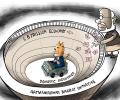
The Indian economy is on the path of a durable recovery on the back of conducive monetary and credit conditions, the global headwinds notwithstanding, said a Reserve Bank of India (RBI) article on the state of the economy. Domestically, there have been several positives on the COVID-19 front, in terms of reduced infections and faster vaccinations, the article published in the RBI Bulletin November 2021 added. The Indian economy, the article said, is clearly differentiating itself from the global situation, which is marred by supply disruptions, stubborn inflation and surges of infections in various parts of the world.

Markets ended weak tracking the expiry of April derivative contracts.

Headline inflation for November shot up to 4.8 per cent, mainly driven by food prices, as compared to 1.3 per cent in the previous month. Food inflation was 19.8 per cent in November.
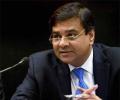
RBI said the outlook for economic growth for 2016-17 has turned uncertain after the unexpected loss of momentum by 50 basis points in Q2 and the effects of the withdrawal of banned notes

Raghuram Rajan's three-year term is the shortest of any G20 country and the recent governors have been given second terms as much as seven months in advance.

Sources close to the development told Business Standard the company was exploring different ways to save on its employee costs and had laid off a few employees on "performance" grounds. "We will see a similar development for the next few months. "The company is fine-tuning its hiring policies and implement rigourous measures to look into employee performance," a source said.

Elections may be a few months away, but the government may get into election mode much earlier than that, predicts A K Bhattacharya.

Sectoral performance was mixed with media and PSU banking stocks attracting buyer interest and healthcare, FMCG and metal stocks bearing the brunt of the bears

The fragmentation of politics and the pressures of coalition management have contributed to a near-secular rise in budgetary social expenditures and spending on subsidies since 1991, leaving little fiscal space for government-led capital investment.
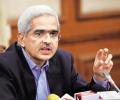
A staunch defender of demonetisation, it would be interesting to see how he handles the government's increasing demand for more cash from the RBI, and letting some weak banks get out of prompt corrective action.
High crude oil prices, which the central bank perceives as a risk to inflation, may limit the extent of rate cut to 25 basis points rather than 50 bps, economists said.

There has been a stellar rise for the Indian markets this far in calendar year 2021 (CY21) with the S&P BSE Sensex surging over 19 per cent. The gain in mid-and small-cap indices on the BSE has been sharper with both these indexes surging around 38 per cent and 54 per cent, respectively during this period. Rampant spread of Covid pandemic's Delta variant and the ensuing lockdown and mobility curbs across India, rising prices key commodities, including crude oil and its impact on inflation, possibility of tightening of policy stance by major global central banks, especially the US Federal Reserve (US Fed) have been some of the key headwinds that the markets successfully negotiated during this period.

The repo rate, at which RBI lends to the banking system, will be at 7.5%
The Reserve Bank of India on Friday cut short-term lending rate by 0.25 per cent.
The Reserve Bank of India on Tuesday left all the key interest rates unchanged in the first quarterly review of the monetary policy.

The panel was set up to suggest ways to reform India's monetary policy.

The RBI in its first quarterly review of the credit policy kept the repo and reverse repo -- short-term rates at which banks lend and borrow from RBI--unchanged, retained economic growth projection at 6 per cent with an upward bias and projected inflation at around 5 per cent by March, 2010.

The Central bank primarily factors Consumer Price Index while deciding on policy rate.

Reserve Bank Governor Raghuram Rajan expressed confidence in India's growth and said the country is on target to meet Jan inflation target of below 6%.

After a turnaround in performance by Indian equity markets since July that has seen the S&P BSE Sensex and the Nifty50 wipe out the year-to-date losses, analysts suggest investors start nibbling into stocks that are focused on the domestic economy. While they say intermittent corrections, led by policies of global central banks and other economic data, cannot be ruled out, analysts expect India's relative outperformance among global equity markets to continue as it looks better placed with a healthy economic recovery, and remains one of the fastest growing major economies. In this backdrop, Neeraj Chadawar, head of quantitative equity strategy at Axis Securities, believes that amid global slowdown, aggressive tightening by the central banks, and preference for domestic interests first (by the local government), export-oriented themes are likely to be muted or will deliver conservative returns in the near-term.

India's industrial production contracted by 3.6 per cent in February, official data showed on Monday. According to the Index of Industrial Production (IIP) data released by the National Statistical Office (NSO), manufacturing sector output declined by 3.7 per cent in February 2021. Retail inflation rose to 5.52 per cent in March, mainly on account of higher food prices, government data showed on Monday. The consumer price index (CPI) based retail inflation stood at 5.03 per cent in February.
.jpg)
As on Monday, the prices of many vegetables had fallen as much as 50% compared with those a month before, due to increased supply, following the arrival of winter crops in the markets.

RBI Governor Raghuram Rajan, who today surprised markets with a rate hike, defended the move saying a rate cut would not have impacted either banks or borrowers and that bringing down retail prices is the key to sustainable growth.
